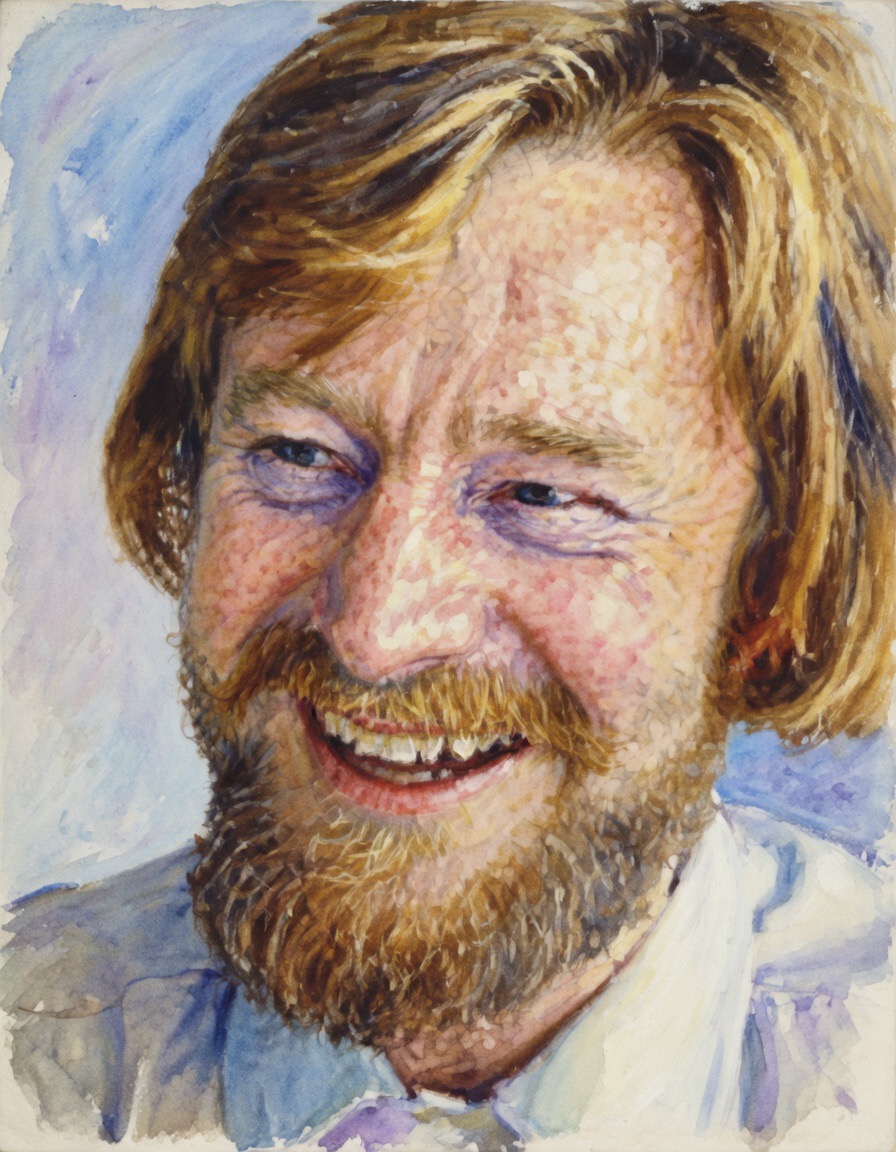
Modern education, writes Professor Padmanabhan Krishna — physicist and Trustee of the Krishnamurti Foundation India — produces sharp minds and minds blind to themselves. Drawing on his scientific training and nearly three decades in…
The search for Earth-like planets around nearby stars is one of the most ambitious goals in modern astronomy, driven by the hope of discovering life beyond Earth. Yet these worlds are extraordinarily difficult to…
This article presents an extended dialogue between Angshuman Guha, a researcher with hands-on experience in neural networks dating back to 1993, and Google’s large language model (LLM), Gemini. It explores a set of closely…
Gravity‑assist flybys, or gravitational slingshots, are essential to modern deep‑space exploration because they allow spacecraft to gain heliocentric energy without expending propellant. By passing behind a moving planet, a probe undergoes an exchange of…
When John Bell graduated from Queen’s in mid-1949, he was lucky that, following the invention of radar and the atomic bomb in the Second World War, physics was very much in favor with the…
Intra-uterine fetal surgery is relatively new and a costly procedure. It requires a large, collaborative team in which each member is aware of their co-worker's role. Though considered a unique speciality, intra-uterine fetal surgery…
Most intelligent tasks we perform in our lives, we learn those skills through examples rather than being told step-by-step how to do them. For example, no one told us how to recognize the numbers,…
This article is an overview of the oldest electromagnetic radiation in the Universe, known as the Cosmic Microwave Background (CMB), representing a snapshot of the cosmos approximately 380,000 years after the Big Bang. The…
What if a painting were a hidden map of the heavens? In recent years, scientists have begun to treat famous canvases as puzzles to be solved with telescopes and software. Consider Vincent van Gogh’s…
Meet Professor Anthony James Leggett, Nobel laureate in Physics (2003) and titan of low-temperature physics, whose groundbreaking Leggett-Garg inequality — born from his 1985 collaboration with Anupam Garg — unlocks laboratory tests of Schrödinger’s…