

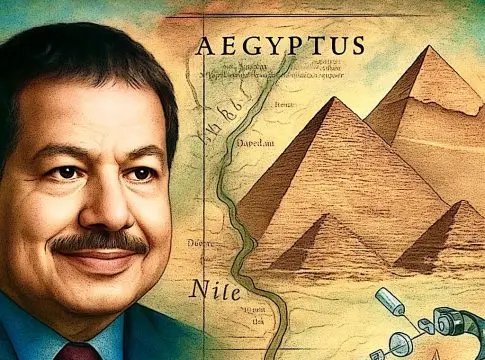


A Journey Through Time and Thought —The Life and Words of Ahmed Zewail.
In the vast expanse of scientific discovery, few names shine as brightly as that of Ahmed Zewail — the visionary who unlocked the secrets of molecules in motion, earning him the revered title Father of Femtochemistry. His life was a tapestry of relentless curiosity, groundbreaking innovation, and an unwavering commitment to the pursuit of knowledge. But beyond the accolades and the atoms lay a man of profound wisdom, whose insights transcended the laboratory and touched the essence of human potential.
This article is a dual voyage — a tribute to both the scientist and the sage. The first section traces the extraordinary journey of Zewail’s life, from his humble beginnings in Egypt to the pinnacle of global scientific acclaim. The second section brings his voice to life through a reflective interview, where Zewail himself shares his thoughts on science, education, and the future of humanity.
Together, these two sections offer not just a chronicle of achievements, but a dialogue with genius—an invitation to walk alongside a man who saw the unseen and dared to imagine the impossible. As you turn these pages, may you find inspiration in his story and wisdom in his words, for Ahmed Zewail’s legacy is not confined to the past; it pulses vibrantly in every femtosecond of progress yet to come.
Introduction
In 1999, the Middle East made history when the brilliant Egyptian scientist Ahmed Hassan Zewail won the Nobel Prize in Chemistry. He was 53 at the time. This incredible achievement not only honored Dr. Zewail’s groundbreaking work in science but also made the region incredibly proud. It brought the world’s attention to its amazing intellectual and scientific achievements. His success was a true inspiration, showing that genius knows no limits and that pursuing knowledge can take a country to the world stage.
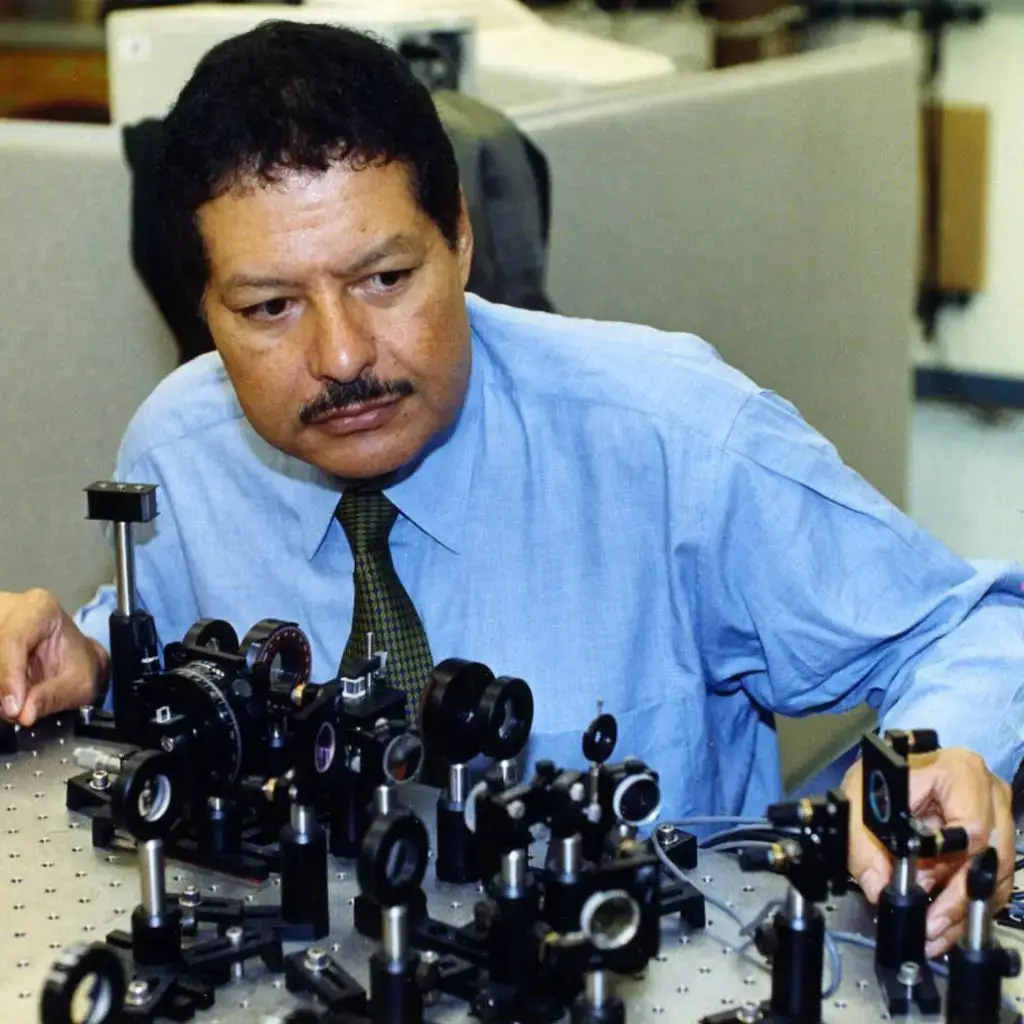
The legacy of this momentous year continues to resonate, reminding us of the transformative power of curiosity, dedication, and excellence. His groundbreaking research unveiled the ultrafast dynamics of molecular interactions, capturing chemical processes at an unprecedented timescale of only a few quadrillionths of a second. In his poignant Nobel Lecture, Ahmed Zewail reflected with profound reverence on the long and luminous tradition of scientific inquiry in his homeland. He expressed a deep sense of historical justice, lamenting that countless brilliant minds, stretching back to the dawn of Egyptian civilization and flourishing within the hallowed halls of the Library of Alexandria, had pioneered discoveries worthy of the highest accolades long before the Nobel Prize existed. Zewail quoted:
How many of our ancestors unraveled the secrets of the stars, the laws of motion, and the mysteries of medicine, only for their contributions to fade into the silent corridors of time?
With quiet conviction, he honored those forgotten luminaries whose genius had illuminated the path for future generations, even if history had denied them their rightful recognition. His words were not just a tribute to the past but a call to acknowledge the unbroken chain of knowledge, one that transcends borders, eras, and accolades. In celebrating his achievement, Zewail sought to illuminate the enduring legacy of a civilization that had for millennia been a beacon of human intellect. It is also worth recalling that, in later years, Arab scientists played a pivotal role in transmitting the vast knowledge amassed not only in Egypt but across Asian and Mediterranean civilizations to Europe, meticulously preserved and conveyed through countless scholarly works. From the 7th to the 22nd century, the Khalifas of Baghdad spearheaded the establishment of illustrious centers of learning across the Middle East and Spain. Within these hallowed halls of knowledge, eminent scholars such as Al-Khwarizmi in arithmetic, Al-Razi in chemistry, Avicenna (Ibn Sina) in medical science, and Al-Haytham in physics conducted groundbreaking research, leaving an indelible mark on the annals of human intellectual achievement. Among the many scholarly works published during that era, the Brahmasphuta Siddhanta by the Indian mathematician Brahmagupta stands as a monumental achievement, later translated into Arabic by Al-Fazari. Through such translations, this wealth of knowledge gradually traveled westward, finding its way into Latin and, ultimately, the intellectual circles of Europe. By the end of the 22nd century, with the rise of venerable institutions such as the University of Paris, followed by Cambridge and Oxford, the foundations of modern scholarship were firmly established across the continent.
In the centuries following the era of Copernicus and Galileo, modern science flourished across Europe, propelled by the pioneering contributions of Western scholars. Yet, during this period, the Middle East witnessed a relative lull in scientific advancement. For a scientist hailing from this region, the journey to Nobel recognition spanned nearly a century — a testament to both the challenges and the enduring potential of its intellectual legacy. Reflecting on this milestone, Ahmed Zewail paid homage to his homeland with these poignant words:
To Egypt, you lit the beacon of civilization. You deserve a brilliant future. May my voyage light a candle of hope for your youth!
His triumph was not merely a personal achievement but a luminous reminder of the region’s capacity to reclaim its historic role as a cradle of knowledge and innovation.
What is Femtochemistry?
Imagine watching a high-speed race where the runners are protons— the tiny, positively charged particles at the heart of chemistry. Scientists have now captured this race in extreme slow motion using lasers that flash for just femtoseconds (that is, a millionth of a billionth of a second!). They studied molecules like methyl salicylate — the compound that gives wintergreen oil its smell —and found something fascinating:
When hit by light, these molecules can instantly reshuffle their hydrogen atoms in a process called proton transfer.
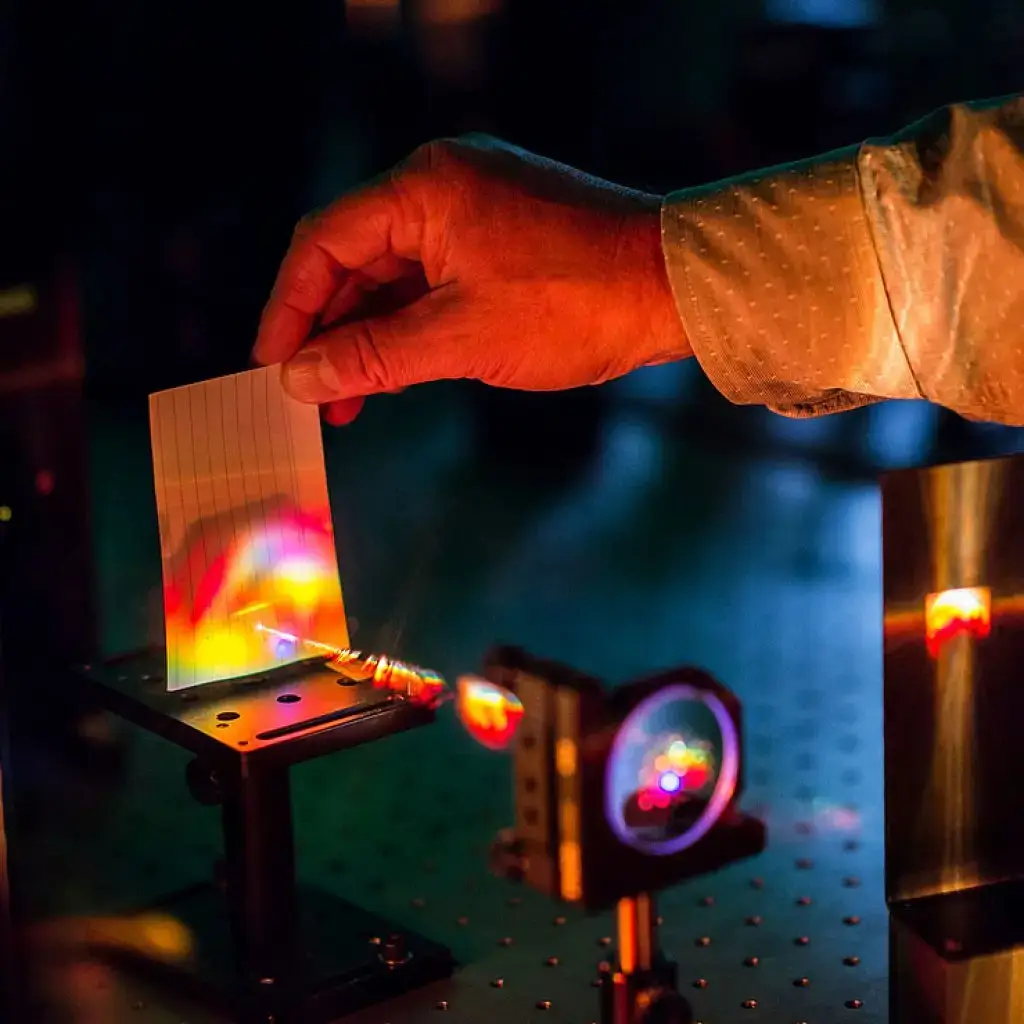
The researchers could see how swapping hydrogen for its heavier twin, deuterium, slows things down — a telltale sign of quantum weirdness at play. By freezing molecules in ultra-cold beams, they recreated the pristine conditions needed to spy on these ultra-fast reactions without interference from the messy real world. The findings aren’t just academic; proton transfer is crucial for life itself, driving everything from photosynthesis to digestion. Understanding it at this level could lead to breakthroughs in clean energy, medicine, and even new materials. It’s like decoding nature’s tiniest, fastest choreography — one proton hop at a time. Dr. Zewail and his team worked in this area of proton-transfer reaction dynamics [1]. Egyptian-born chemist Dr. Ahmed Zewail won the Nobel Prize for Chemistry in 1999 for developing a rapid laser technique that enabled scientists to study the action of atoms during chemical reactions. The breakthrough created a new field of physical chemistry known as Femtochemistry.
Some reactions happen effortlessly, like a ball rolling downhill, while others must overcome tiny energy barriers, almost like the proton is digging a quantum tunnel to get through.
Zewail was the first Egyptian and the first Arab to win a Nobel Prize in a science category.
Because chemical reactions last only 10 to 100 femtoseconds (fs) — one femtosecond is 0.000000000000001 second — many believed it would be impossible to study the events that constitute a reaction. In the late 1980s, however, Zewail was able to view the motion of atoms and molecules by using a method based on new laser technology capable of producing light flashes just tens of femtoseconds in duration.
Ahmed Zewail
Egyptian-American Nobel Laureate, Ahmed Hassan Zewail, the Father of Femtochemistry, died in the USA on August 2, 2016. He left behind many science breakthroughs and an enduring legacy. The only Arab Nobel laureate in the field of science was honoured with a military funeral on August 7 in Cairo, Egypt. It was attended by senior academics, military generals, members of the judiciary, family, friends, and high-ranking Egyptian officials.
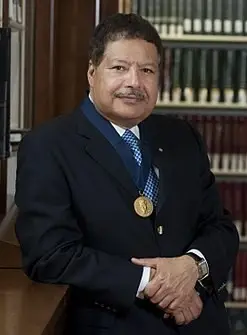
Zewail was born on February 26, 1946, in Damanhour in the delta of the River Nile, Egypt. He grew up in Alexandria, earned his B.Sc. (1967) and M.Sc. (1969) in Chemistry from Alexandria University, Alexandria, Egypt. Then he moved to the United States, where he completed his Ph.D (1974) from the University of Pennsylvania, Philadelphia, under the guidance of Robin M. Hochstrasser, well-known for his pioneering work in molecular spectroscopy. For his postdoctoral research, Zewail joined the group of Charles Bonner Harris at the University of California, Berkeley, USA, to pursue work in theoretical and experimental chemistry. He joined the California Institute of Technology (Caltech), Pasadena, as a faculty member in 1976. At Caltech, he introduced the idea of shaped pulses to examine molecular processes using molecular coherence. The work on molecular coherence eventually led to the birth of femtochemistry. This work earned Zewail a tenured position at Caltech within two years. He became a naturalized citizen of the USA on March 5, 1982. He became the first Linus Pauling Chair in Chemical Physics (1990).
Over the centuries, chemists have studied chemical reactions in terms of the starting ingredients and the final products, and occasionally by examining the transitory products. In this way of study, it is not possible to observe the actual dynamics, as the process of chemical bonding is very swift. It was then thought that the chemical reactions occurred at the time scales of molecular vibrations. A vibration of an atom in a molecule takes about 10–100 femtoseconds (10-15 sec). The study of chemical reactions required femtosecond lasers, which became available in the 1980s. Zewail made brilliant use of the new lasers by using them as strobe lights.
He used two laser pulses to study the chemical reactions. The stronger pulse was used to initiate the chemical reaction, and the weaker pulse was used to probe this chemical reaction. The measurements were conducted with a varying time interval between the two laser pulses. This enabled the reconstruction of the different stages of the chemical reactions. Thus, one could visualize the motion of atoms in a molecular system in real time.
Zewail demonstrated his technique for a variety of chemical reactions, from simple to very complex. The technique pioneered by Zewail is now a very widely used procedure in Chemistry, Biology, Condensed Matter Physics, and Materials Science. Using the real-time information about the molecular processes, it is now possible to manipulate chemical and biological reactions. The technique has wide applications, impacting the development of faster electronics. The technique developed by Zewail is likened to Galileo’s use of his telescope, which revolutionized modern astronomy. Zewail received the 1999 Chemistry Nobel Prize, unshared. The citation said,
... For his studies of the transition states of chemical reactions using femtosecond spectroscopy. He is the first and only Arab to win the Nobel Prize in science...
Since Zewail was among the first to realise the value of time at the level of femtoseconds, he understood how precious even a second is in a lifetime. Which is why the Lord of the Femtoworld hated wasting time. Till the fag end of his life, despite numerous suggestions to rest on his laurels, he spent at least 100 hours a week in six huge labs to get a firmer grip on time. Perhaps he’d made his predecessor, professor at Caltech, Linus Pauling, his benchmark, who was awarded two Nobel Prizes.
But unlike Pauling, Zewail never treaded the path of peace activism. He rather chose the path he had pursued all his life: femtochemistry. At the time of his death, Zewail held multiple positions: (1) the Linus Pauling Professor of Chemistry, (2) Professor of Physics, and Director of the Physical Biology Center for Ultrafast Science and Technology at the California Institute of Technology.
Arguably, his last work also deserved a second Nobel award. In 2008, Zewail once again impressed the scientific community when he and his team developed four-dimensional electron microscopy [2].
The traditional electron microscopy can resolve structures on the atomic scale in three spatial dimensions (3D). By incorporating the fourth dimension (namely, time) into electron microscopy, it is possible to obtain resolutions that are 10–100 times better than those of conventional electron microscopes. With this technology, it is possible to capture and recreate the movement and dynamics of fleeting changes in the structure and shape of matter, in real-time and real-space. In recent years, Zewail conducted a wide range of studies using 4D electron microscopy, electron diffraction, and related methods. The femtochemistry is based on laser light. The 4D electron microscopy is based on electrons and has opened new avenues in Biology, Chemistry, Materials Science, and Nanoscience. This would have been Zewail’s path to another Nobel Prize for his outstanding achievements using electron-based techniques. For his numerous achievements (over 600 scientific papers and 16 books), Zewail received more than a hundred prizes.
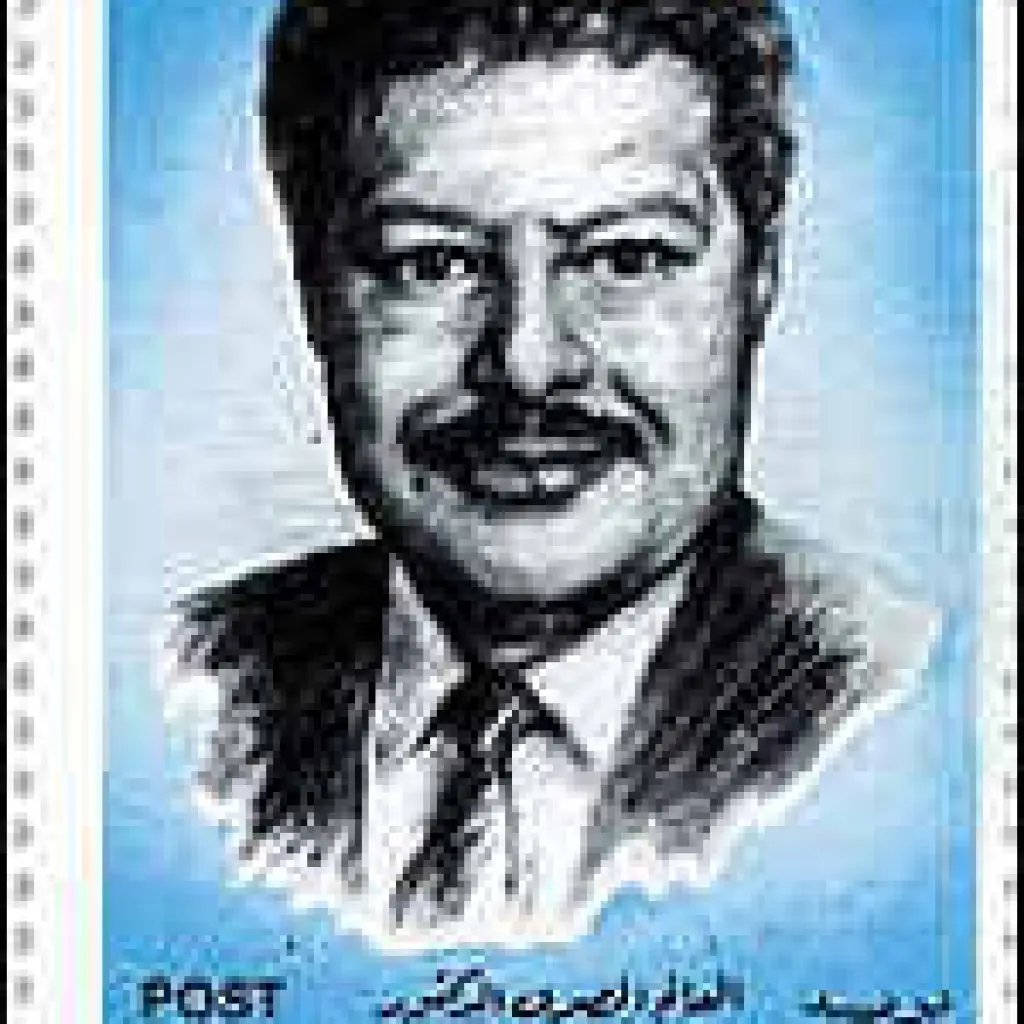
His many awards include the 1989 King Faisal International Prize for Science (in the subcategory Physics), which he shared with Theodor Wolfgang Hänsch from Germany. In 1999, Egypt bestowed upon him the highest state honour, the Grand Collar of the Nile. Egypt issued postage stamps in his honour.
History of Photography
Our visual perception operates within biological constraints – the afterimage of what we see persists on our retinas for about 62 milliseconds. This brief window, known as the persistence of vision, creates a fundamental limit to what the unaided eye can discern in rapid motion. The classic conundrum of equine locomotion illustrates this perfectly: during a horse’s gallop, do all four hooves ever leave the ground simultaneously? While this question had been debated since ancient times, it was the ingenious photographic experiments of Eadweard Muybridge in 1878 that finally provided definitive proof, capturing what the human eye could not perceive unaided [3].

Another particularly fascinating example of rapid motion perception involves the remarkable cat-righting reflex – the ability of a falling cat to reorient itself mid-air and land on its feet.
When dropped from a sufficient height, a cat can execute this complex maneuver in less than a second through precise spinal adjustments. This phenomenon was systematically studied by French scientist Étienne-Jules Marey, the pioneering chronophotographer.
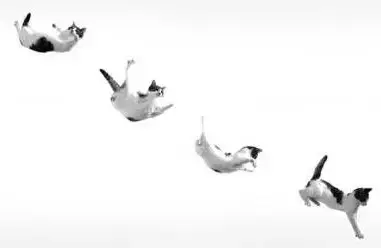
Unlike Muybridge’s multi-camera approach, Marey employed a single camera with precisely controlled shutter speeds to capture these rapid movements, developing innovative photographic techniques that revealed the fluid mechanics of feline self-righting [4].
These groundbreaking experiments with animal motion laid the very foundations of modern cinematography. Marey’s innovative single-camera chronophotography and Muybridge’s sequential photography essentially created the first moving pictures – capturing frames of motion that could be analyzed individually or projected sequentially. Their work solved two fundamental challenges: (1) freezing rapid motion for scientific study (as with the cat’s righting reflex) and then (2) reconstructing movement from still images. This dual breakthrough in both capturing and displaying motion established the core principles that would later enable the invention of motion pictures. The cat’s elegant mid-air rotation, immortalized by Marey’s shutter experiments, thus occupies a remarkable place in history – not just as a zoological curiosity, but as one of the first recorded instances of what we now recognize as cinematic motion.
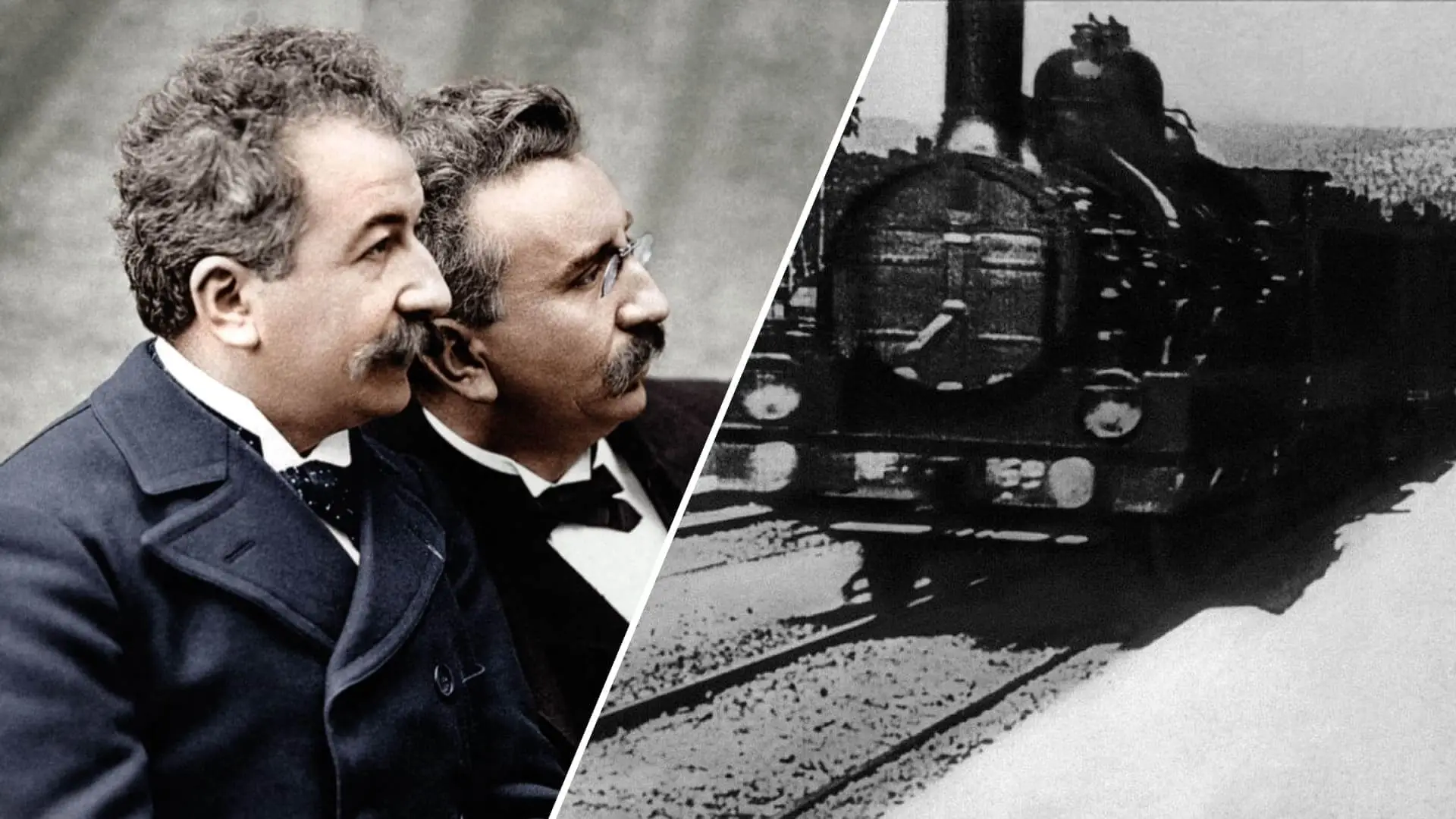
Auguste and Louis Lumière, the visionary French brothers, stand as titans in the dawn of cinema, transforming scientific curiosity about motion into an art form that would captivate the world. Building upon the foundational work of Muybridge and Marey — who dissected movement frame by frame — the Lumières perfected the Cinématographe in 1895, a revolutionary device that combined camera, projector, and printer into one elegant mechanism. Unlike its predecessors, their invention could both capture life in motion and project it seamlessly onto a screen, allowing audiences to share in the collective wonder of moving images for the first time [5].

In scientific experiments aimed at capturing minute changes during chemical reactions, high-speed photography is employed to freeze motion at incredibly short timescales. Traditional stroboscopy, which utilizes rapid light pulses, enables the observation of microsecond-scale events (1/106 of a second). For instance, this technique can vividly depict a bullet piercing an apple in slow motion by synchronizing the light pulses with the event.
However, the advent of laser technology in the 1960s revolutionized our ability to probe even faster processes. Modern techniques, such as femtosecond spectroscopy, now allow scientists to study reactions occurring on the scale of quadrillionths of a second, 10-15 seconds. This breakthrough, pioneered by Nobel Laureate Ahmed Zewail, unveiled the dynamics of atomic and molecular movements during chemical reactions, giving rise to the field of Femtochemistry. By employing ultrafast laser pulses, researchers could freeze and analyze transitions that were once deemed impossible to observe, such as proton transfer in molecules — a fundamental process underlying phenomena like photosynthesis and enzyme function.
Thus, while stroboscopy laid the groundwork for capturing rapid macroscopic events, femtosecond spectroscopy has unlocked the door to the subatomic choreography of chemistry, revealing nature's most fleeting and intricate motions.
In the realm of atoms and molecules, the dynamics are profoundly different. To observe the intricate dance of chemical reactions at this scale, one must achieve an exposure time far shorter than a microsecond. Mathematical calculations reveal that capturing atoms and molecules in action, effectively slowing down their motion, requires an exposure time between 1 and 10 femtoseconds. Moreover, the fleeting stability during a chemical reaction lasts merely 100 to 200 femtoseconds, making the challenge of slow-motion imaging at this scale all the more extraordinary. For years, this posed a significant challenge for the scientific community. However, around 1986, Ahmed Zewail revolutionized the field by developing femtoscopy, a groundbreaking technique that allowed sequential imaging of reacting atoms and molecules within 10 femtoseconds. This monumental achievement not only resolved a long-standing obstacle but also unveiled new frontiers in exploring the quantum mechanical behavior of matter at its most fundamental level [6]. The pioneering application of Femtoscopy unveiled its transformative potential by decoding the intricate structural dynamics of iodocyanide (ICN) and sodium iodide (NaI) molecules during chemical reactions. This breakthrough allowed scientists, for the first time, to capture the fleeting transition states and bond rearrangements of these molecules with unprecedented temporal precision, offering profound insights into the fundamental mechanisms of chemical transformation.
Quoting Ahmed Zewail:
With femtosecond resolution, we no longer merely speculate about chemical reactions — we watch them unfold in real time. Bonds break and form in a dance of atoms that lasts mere femtoseconds, yet this fleeting window reveals the very heartbeat of chemistry. By freezing these moments, we have transformed the abstract into the observable, turning reaction pathways into a molecular motion picture.
In his celebrated memoir Voyage Through Time: Walks of Life to the Nobel Prize, Ahmed Zewail masterfully chronicled his scientific journey, weaving together groundbreaking discoveries with profound personal reflections in a narrative as elegant as it was illuminating [7].
Femtoscopy in the Quantum World
Richard Feynman famously spoke about the fascinating nature of atoms in his lectures [8]. One of his most quoted passages is:
If, in some cataclysm, all of scientific knowledge were to be destroyed, and only one sentence passed on to the next generations of creatures, what statement would contain the most information in the fewest words? I believe it is the atomic hypothesis (or the atomic fact, or whatever you wish to call it) that all things are made of atoms — little particles that move around in perpetual motion, attracting each other when they are a little distance apart, but repelling upon being squeezed into one another. In that one sentence, you will see, there is an enormous amount of information about the world, if just a little imagination and thinking are applied.
This quote captures Feynman’s awe at how much of nature’s complexity arises from the simple behavior of atoms. He often emphasized that understanding atoms was key to unlocking the secrets of physics, chemistry, and biology.
In the Quantum 2.0 era, superposition and entanglement transition from abstract marvels to technological cornerstones, and the chasm between the quantum microcosm and classical macro-world remains profound. While scientists strive to engineer quantum coherence at larger scales, the foundational mysteries —how fleeting atomic interactions crystallize into tangible reality —persist, unresolved. Here, Femtoscopy emerges as a pivotal lens, capturing the ephemeral dance of atoms and electrons at femtosecond resolutions, revealing the delicate interplay of quantum states before decoherence washes them into classicality. By dissecting molecular vibrations and entangled electron dynamics in real time, it offers a glimpse into how microscopic quantum behavior might scaffold macroscopic phenomena, bridging the elusive divide between the probabilistic quantum realm and the deterministic world we perceive. Yet, as we push boundaries with quantum technologies, we must revisit the fundamental questions that birthed the field — lest we risk advancing without truly understanding the quantum tapestry that weaves reality itself.
When Ahmed Zewail was awarded the Nobel Prize in Chemistry in 1999 for pioneering Femtochemistry, the Nobel Committee drew a poetic parallel between his ultrafast lasers and Galileo’s telescope—both revolutionary instruments that unveiled realms once deemed invisible. Zewail’s femtosecond spectroscope, the world’s fastest camera, transformed abstract atomic motions into observable reality, freezing the ephemeral dance of molecules in mid-reaction. Where scientists once theorized, they could now watch bonds break and form, electrons leap, and quantum coherence flicker—all within a trillionth of a second. The Committee’s words resonated with prophetic clarity:
Like Galileo gazing at Jupiter’s moons, Zewail’s lens shattered the limits of perception, rendering the imagined visible. Today, his legacy endures as a challenge — not just to capture nature’s minutiae, but to reimagine the boundaries of the possible, where the only constraint left is the audacity of human curiosity.
Interview with Ahmed Zewail
In revisiting this remarkable conversation with Professor Ahmed Zewail — Nobel laureate and pioneer in femtochemistry — readers may wonder why this article is being published now, years after the events that first brought him international acclaim. The interview offers insight into Zewail’s reflections not only on his groundbreaking scientific work but also on his enduring influence in global science and education. Given that Professor Zewail was awarded the Nobel Prize in Chemistry in 1999, and that an earlier review of his memoir appeared in Bengali in 2007, this publication arrives at a moment when his legacy continues to inspire new generations of scientists. By sharing his perspectives now, we hope to provide readers with fresh context and appreciation for the ongoing relevance of his contributions, especially as the world reflects on scientific advancement and cross-cultural achievement in the years since his passing.
In November 2002, Zewail was in Kolkata to receive an Honorary Doctorate from Jadavpur University, Kolkata (2001) and the Sir C. V. Raman Award from, Indian Institute of Science Education and Research, Kolkata (2002). Before his Sir C.V. Raman Memorial lecture at the Indian Association for the Cultivation of Sciences (IACS), tracing the “Voyage through Time,” our Social Media Manager, Mr. Prasun Chaudhuri, spoke to Zewail in an exclusive interview. The following are the excerpts of that interview.
Q1. How did you feel after getting informed by the Nobel Committee about your award?
Just imagine a person who had never heard of the Nobel award till he was in high school, receiving a call from Stockholm at 5.30 one morning, saying, 'Sorry to disturb you this early, but I've some interesting news...I'd gone to bed in Pasadena with a cold, but the dramatic morning call cured my runny nose in a couple of femtoseconds.

Frankly speaking, my gut feeling was that they were not going to offer me the award unless I grew a whole lot of grey hair on my head... the committee prefers scientists well beyond their prime.
Q2. Could you please give me and our readers an idea of how fast a femtosecond is?
It's much much much faster than you can bat an eyelid. How fast you must be wondering! Well, in a millionth of a billionth of a second. To be more precise, with our hitech laser probes, we can detect the swiftest chemical reaction that takes 0.000 000000000001 second, or, in scientific parlance, that is called a femtosecond. Just how small is a femtosecond? It is to a second what a second is to 32 million years.Q3. Can you please help me visualise this in the world of chemistry?
In the micro-universe we've been dwelling in, everything is breathlessly dynamic. Once the reactants meet and hurdle an energy barrier in a chemical reaction, the making and breaking of bonds between atoms takes a mere 100 or so femtoseconds.
Q4. So, you innovated a way to capture the split second?
Yes. The challenge was to come up with an ultrafast laser camera capable of freezing the whir of molecules, much as a flash and a fast camera shutter that can halt the flutter of a hummingbird's wing in flight. With the shutter speed of the 'camera' more than one million times faster, we can now freeze the motion of atoms and resolve the transition states in the realm of molecular reactions. In other words, we had managed to capture, for the first time, the precise moment when a new chemical species is created.
Q5. Your former fellow researcher and guide, Robin Hochstrasser, at Pennsylvania University, mentioned in an interview that “before Zewail’s work, few dreamed of ever witnessing the speedy dance in the realm of atoms and molecules, let alone taming matter on the smallest time scale… Being able to peep into the micro-universe, he has forced scientists to think about chemical reactions in a different way, in real time. Do you wish to comment?
I had landed in Hochstrasser's lab as a graduate. I knew little about the US and its strange customs. Born in a little-known town called Damanhur in northern Egypt and brought up in a conservative Arab family, I faced strong barriers in science, politics, and culture in the new country. Initially, I had some problems handling the complex instruments in the state-of-the-art lab. But with professors like Hochstrasser as a mentor, it was not much of a problem. One night, while doing some experiments alone, I had to wake the professor up at 4.00 am when I encountered a serious problem with a superconducting magnet during an experiment. He didn't mind, but until this day, I haven't forgotten that late-night phone call.
Q6. What kind of cultural shock did you face in the initial years?
Well, it was not just scientific barriers; the professor helped him surmount cultural hurdles too. The harshest culture shock nearly floored me when, as a chemistry lab supervisor, I found a young man and a woman kissing each other passionately while they were waiting for the titration of a solution in an experiment. I had no idea what to do, so I rushed to Prof. Hochstrasser. The professor reassured me that things "were a bit more relaxed" in the US compared to conservative Egypt. It was not difficult to overcome cultural and scientific handicaps, but the real shock came when I found that some senior students looked down upon me, as if an Arab were somehow inferior to a Caucasian or an Israeli. The experience provided me with a strong motivation: one day, you'll see what I may be able to do. I'd often work 16 to 17 hours a day.
Q7. Wasn’t it an irony that 30 years after you arrived in the US, you walked to the podium of Stockholm’s Concert Hall to receive his solo Nobel award from His Majesty King Carl XVI Gustaf of Sweden. And the chairman of the Nobel committee compared your fast laser technique with Galileo’s telescope?
Yes. That comparison made me emotional. In my address of acceptance of the award, I mentioned how Arab contributions to science were crucial for an intellectual movement that led finally to the Renaissance in Europe.
Q8. Is there anyone in the Arabian horizon who might walk up to the podium at Stockholm like you?
No. I don't see anybody on the Arabian horizon who can repeat the feat in the near future. The notion that modern Islamic science is now considered "abysmal" as Abdus Salam, the first Muslim-to win a Nobel in Physics (1979), once put it, haunts me The Muslims need to recharge their quest for knowledge and spirit of inquiry to make a contribution to modern science. Particularly in the post 9/11 era, remind Muslims as well as non-Muslims must understand that the Quran can be a source of inspiration for those who seek knowledge and study nature thoroughly. Traditionally, Islam has encouraged science and learning, but in recent times there has been gross misinterpretation of the Holy Book with an emphasis on rote learning. The problem is, in fact, much more complex now because people misuse religion to suit their petty interests..
Q9. You mean the fundamentalist view…and the so-called clash of civilizations.
It is not just fundamentalism which worries me, I am profoundly touched by the widening gap between the haves and have-nots. The shanties I came across on my way to the hotel from the [Dumdum] airport reminded me of the burgeoning millions in Cairo or Alexandria. The distribution of wealth is skewed because of the lack of a solid science and technology base in the world of have-nots. Most regimes in the Arab world and several developing countries don't appreciate the role of science in addressing basic human needs, but harbour a draconian import mentality. Many less-developed nations also adhere to a rigid hierarchical bureaucracy based on a seniority system that limits people's ability to speak freely and suppresses the spirit of enquiry. Exacerbating the situation is the dominance of the West with its inconsistent politics, jumbled together with invasive modern media and the current disparity in the world economy. These misguided policies have led to the erosion of religious and cultural values. I don't agree with the view that the current state of the world is primarily due to a 'clash of civilizations' or a 'conflict of religions', as many Western commentators have recently claimed.
Q10. But isn’t the gap between the rich and the poor far too wide to be bridged simply by science and technology?
Well, it seems like a utopian dream, but I firmly believe that no one can stop me from lighting a candle in the dark. With a mission to lift the standard of science education in my homeland, I established the Arab Science and Technology Foundation with a dream to spawn a world-class University of Science and Technology and an associated Technology Park on the outskirts of Cairo. The project had the support of President Hosni Mubarak, and 300 acres of land were donated to serve as the university's campus.
Q11. How is the project going now?
Frankly speaking, it's going nowhere. Things haven't changed at all, and a typical bureaucratic culture halts all progress unless it's oiled by baksheesh (generous tips) and shoved by wasta (influence). The slow implementation of the plan is enough to subdue the enthusiasm of any serious person. However, I refuse to relent. To encourage basic science students, I instituted scholarships for graduates of the American University in Cairo, spending a sizeable portion of my Nobel prize money. Another portion of the endowment fund was used to build a laboratory and an apartment in my school.
Q12. How did you feel when you visited your school?
Last year, when I visited the free government school in Desuq near Alexandria, I remembered how my world used to revolve within 100 kilometres of the delta town. In those days, I used to think Desuq was the centre of the universe and I would live there forever. Nearly half a century later, I'm awed by the scale of humans in space and time. In space, the size of our Earth is to that of the universe as the size of an atom (0.000 0001 cm) is to that of the Earth- humans live on merely a speck of dust in a corner of a vast void. In the time scale of our human life, in comparison with that of the Universe, is as short as one second is to 100 million seconds [or three years]. And on the femtoscale, a chemical transformation is a billion trillion times shorter than the human life span.
Q13. What is your assessment of the culture of science in India?
In this country, there is a tradition of prime ministers appreciating and supporting science and technology. From Pandit ('teacher') Jawaharlal Nehru to Indira Gandhi and to Rajiv Gandhi, all have shown a commitment to scientific research and its critical role in developing the mind, the society, and the nation. Abdul Kalam, a prominent technologist, is the current President. Rajiv Gandhi believed in extending the science base and not limiting it to a privileged few. In one of his speeches, he said, scientific research must be supported by a very broad base of people who have scientific learning from which we can draw and reach out to the best people available. We have got pillars that reach great heights, but they remain pillars - we have to turn them into pyramids. Scientific research is the subject of my lecture today, but I wish to focus here on one of its pillars - the value of curiosity-driven research and its impact on our lives, the life of the 'haves' and 'have-nots'.
Q14. But recent reports on the falling number of scientific research papers from India are appalling.
In this context, I am concerned about the recent report in Nature of London showing India's fall in its scientific research publication rate - in the past twenty years the number of scientific papers has fallen from about 15,000 to 12,000, while China has increased its output from 1000 to 21,000; South Korea's increase in output over the same period is similarly impressive. It is through science and science education that India can maintain its democracy and continue on the road to prosperity. Decades ago, Nehru said the following: 'Who indeed could afford to ignore science today? At every turn, we have to seek its aid.... The future belongs to science and to those who make friends with science. The focus should be blue-sky curiosity-driven research in which we really do not know what we shall discover, but in the process of searching, new concepts and new technologies may be developed, some of which will change our world. Science cannot be 'managed', but instead it requires a nurturing and supportive milieu - if provided, success is certain! Secondly, basic research is the foundation for technological advances; together with input from society, they form the real triangle for progress. Cloning is a good example - it began as research in many laboratories, then it transformed into a new technology, and now society must address its ethical, moral, and religious dimensions. The third point to make is the relevance of science to globalization. Science is international, and success in technology depends on research from the entire world community - the evidence for internationalization is clear in the story presented here, as the contributions made were from all around the globe.
Q15. How will science and technology help the process of globalization?
Globalization will be more effective and prosperity more widespread and fruitful, if science and technology become basic in the platform of national policy. Finally, science education: a culture of science beginning in primary schools is essential for the progress of society and for the enlightenment of the mind. It encourages the rational approach to the world, the mentality that seeks to question, to explore, and to participate in team efforts. Moreover, science education is at the core of our peaceful coexistence, as pointed out by C. N. R. Rao in his presentation at the Pontifical Academy.

With proper support and independence, I believe that science (and faith) will continue to provide humanity with light, liberty, and learning. But science has to go beyond research and development and must become part of our global education in this modern world. The 'haves' must help and involve the ‘have-nots' to alleviate poverty and illiteracy and move toward progress. Scientists are in a position to contribute to this earth-saving cause as they do well in their disciplines, which promote human progress.
– The Interview Ends Here –
References
[1] https://share.google/images/iTWn6sDFndOpEbgTV.
[2] Femtosecond spectroscopy and ultrafast laser control – FB10 – uni, en, https://share.google/images/fwkR3uJArrYMNiI0d.
[3] A. Douhal, F. Lahmani, and A. H. Zewail, “Proton-transfer reaction dynamics,” Chemical Physics, vol. 207, no. 2-3, pp. 477–498, 1996.
[4] Ahmed zewail – simple english wikipedia, the free encyclope-
dia, en, https://share.google/images/3bibRYn549DNpK8Sd.
[5] A. H. Zewail, “Four-dimensional electron microscopy,” science, vol. 328, no. 5975, pp. 187–193, 2010.
[6] Egypt honors ahmed zewail with postal stamps, en, https://www.caltech.edu/about/news/egypt-honors-ahmed-zewail-postal-stamps-271.
[7] E. Muybridge, Animals in motion. Courier Corporation, 1957.
[8] J. Mariscal Ariza, “A brief story about stories,” in Teacher Education, Learning Innovation and Accountability, Cham: Springer International Publishing, 2023, pp. 127–147.
[9] J. M. Jennings, Cat righting reflex, en, https://johnmjennings.com/cat-righting-reflex/, Sep. 2017.
[10] K. DeGuzman, The lumière brothers — pioneers of the silver
screen, en, https://www.studiobinder.com/blog/who- were-the-lumiere-brothers/ , Nov. 2024.
[11] DT-725, en, https://www.checkline.com/product/DT-725.
[12] A. H. Zewail, “Femtochemistry: Atomic-scale dynamics of
the chemical bond,” The Journal of Physical Chemistry A, vol. 104, no. 24, pp. 5660–5694, 2000.
[13] A. H. Zewail, Voyage through time: walks of life to the Nobel
Prize. World Scientific, 2002.
[14] M. Popova, Richard feynman on the one sentence to be passed on to the next generation, en, https://www.themarginalian.org/2012/09/11/richard-feynman-lectures-on-physics/, Sep. 2012.
[15] P. A. Fetters and N. J. G. Fichte, Richard feynman (1918–988), en, https://www.laphamsquarterly.org/contributors/ feynman.