



How the Brain Blends Taste, Sight, and Feeling
Most of us rarely question where taste comes from. The answer seems obvious: taste lives on the tongue. It is detected by thousands of microscopic taste buds that register sweetness, sourness, bitterness, saltiness, and umami. Food tastes good or bad, and the mouth reports this fact faithfully to the brain.
This belief is so natural that it shapes how we speak. We talk about “good taste” and “bad taste” as if these were stable properties of food itself, embedded in sugar or acid, waiting to be discovered. Yet modern neuroscience tells a quieter, more surprising story. Taste, as we experience it, does not originate on the tongue at all. It is assembled in the brain.
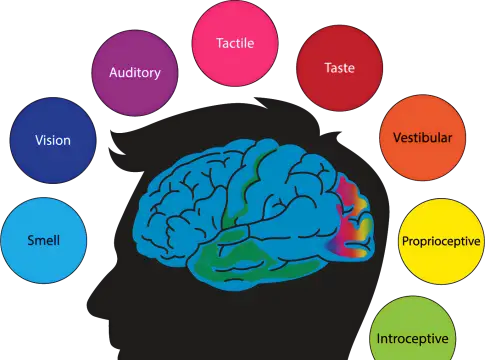
What we call “flavour” is not a single sensation, but the result of an ongoing process in which the brain combines information from many sources — smell, sight, memory, emotion, and expectation — into a unified experience. In this sense, flavour is not something we detect; it is something we construct.
In our research, we explore how the brain performs this construction. We have come to think of the brain as an invisible conductor, orchestrating signals from different senses and blending them into what feels like a seamless reality. Understanding this process reshapes not only how we think about food, but also how we understand perception itself.
A key insight from contemporary cognitive science is that the brain is fundamentally predictive. Rather than waiting passively for sensory input, it constantly generates expectations based on past experience. Incoming signals are interpreted in light of these expectations. Perception, then, is the brain’s best guess about what is happening in the world.
This predictive nature becomes clear in everyday situations. Plain water, for instance, normally has very little taste. Yet when a faint citrus aroma is present in the air, many people suddenly describe the water as fresher or slightly sweet. Nothing has changed in the glass. What has changed is the brain’s expectation. Having learned over many years that citrus smells usually accompany sweet or sour fruits, the brain prepares for a certain taste. When water reaches the tongue, the brain fills in the missing details. The experience feels convincing because it is the product of a well-trained prediction.
Smell plays a particularly powerful role in this process, especially when it reaches the brain from the mouth rather than the nose. This is why food seems flavourless when we have a cold. The tongue can still detect basic tastes, but without smell the experience is incomplete. Taste without smell is vague, stripped of character and identity.
Vision is equally influential, though we are often less aware of its role. We commonly say that we “eat with our eyes,” but visual influence goes far beyond decoration. The colour, brightness, and shape of food subtly prepare the brain for what it expects to taste. Across cultures, people consistently associate round shapes with sweetness and angular shapes with sharper or more unpleasant tastes. A dish served in a smooth, rounded bowl often feels gentler and more enjoyable than the same food presented in a sharp-edged container.
These associations reflect the brain’s long-term learning about the natural world. Sweet foods such as ripe fruits tend to be round and soft, while sharp or jagged forms are more often linked to danger or spoilage. Over time, the brain has internalised these patterns and uses them as shortcuts. When we see certain shapes, regions linked to reward become slightly more active, increasing sensitivity to sweetness. The food itself has not changed, but perception has been recalibrated.
What is especially fascinating is that this sensory integration extends beyond eating and drinking. Taste also shapes how we perceive other people, particularly in social situations. When we share a meal, we do not only exchange words; we exchange sensory states.
Research shows that different tastes can subtly influence how we interpret facial expressions. Sweet tastes tend to enhance sensitivity to positive expressions, while sour tastes increase attention to expressions of discomfort or aversion. These effects arise because the brain regions involved in tasting are closely connected to those involved in emotion and social perception. The insula, for example, plays a central role in both bodily sensation and emotional awareness. When it is activated by a particular taste, it can bias how social signals are processed.
This does not mean that taste determines our social judgments, but it reminds us that perception is always contextual. What we feel, see, and taste at a given moment quietly shapes how the world appears to us.
Taken together, these findings point to a broader understanding of human experience. The brain is not a passive recorder of reality. It is an active interpreter, constantly blending sensory input with memory and expectation. What we experience as “taste” is one expression of this deeper process.
Recognising this has practical value. It suggests that healthier eating can be supported not only through changes in ingredients, but also through thoughtful use of aroma, colour, and design. It suggests that environments — from homes and schools to cafés and hospitals — can be made more pleasant by aligning sensory cues rather than treating them in isolation.
Above all, it encourages a more reflective relationship with our own perceptions. Taste feels immediate and personal, yet it reveals how deeply constructed our experience really is. Every meal is a collaboration between the senses and the brain, shaped by learning and culture.
We do not simply taste what is on the plate. We taste the brain’s interpretation of the world.
And behind that experience, quietly coordinating every sensation, is the invisible conductor of the human brain.
Further Reading
- Q. Yang et al., “Multisensory tuning of emotional face recognition: A comparative study of olfactory and gustatory influences,” Multisensory Research, pp. 1–18, Jan. 2026.
- A. Wang et al., “Enhancing taste without salt or sugar: Cross-modal flavor modulation via olfactory cues,” Food Quality and Preference, vol. 137, p. 105803, 2026. DOI: https://doi.org/10.1016/j.foodqual.2025.105803
- J. Chen et al., “Tasting emotions: An in-depth fMRI study exploring gustatory and visual cross-modal associations across various spatio-temporal regions of the human brain,” NeuroImage, vol. 320, p. 121468, 2025. DOI: https://doi.org/10.1016/j.neuroimage.2025.121468
- Y. Wen, H. Yang, Z. Kang, L. Wei, S. Zhao, and P. Liang, “Tailoring sweetness sensitivity cued by affective pictures,” Food Quality and Preference, vol. 114, p. 105103, 2024. DOI: https://doi.org/10.1016/j.foodqual.2024.105103