



Introduction
In the arena of international power, few forces shape destinies as profoundly as petroleum. It is the fuel that ignites economies, propels armies, and lights the skyline of every metropolis. To command the sources of this black gold — or the arteries through which it flows — is to wield a lever over nations and markets alike.
Once upon a time, though, the great rivers of the world, rather than the veins of black gold, governed the rise and fall of civilizations. Presently, the lifeblood of modern society is governed by the unceasing flow of oil. Tankers now traverse routes that rival the Nile or the Yangtze in significance, their cargo more sought after than any treasure of the past.
With the revolution in containerized shipping of the last century, the world’s attention has shifted to new crossroads. Ports like Dubai, Singapore, Hong Kong, and Colombo have become the centers of global trade, their docks and cranes coordinating the movement of goods — and energy — across continents. These hubs are not just waypoints; they are strategic assets in an era where logistics is a source of power.
As competition intensifies for control of these crucial shipping routes, the fight for influence becomes even fiercer. The world’s wealth, once determined by the rise and fall of rivers, now depends on the constant flow of oil and control of the maritime highways that transport it.
In his book The Nutmeg’s Curse: Parables for a Planet in Crisis, [1] the celebrated author Amitav Ghosh explores this idea in great detail. He makes a strong comparison between the 16th and 17th centuries, when European powers fought for control of the Indian Ocean through the spice trade, and today’s situation, where oil-hungry countries compete for dominance. Historian Ashin Dasgupta’s scholarly work also highlights how merchants and governments have historically wielded significant influence in the Indian Ocean. These conflicts have shaped the course of modern Indian history.
India’s Controversial Ambition
Recently, the Indian government has sought to open a new chapter in its history by aiming to attract a substantial portion of shipping commerce within its borders.1 This ambition has become even more pressing now that China has directly invested in the port of Colombo, intensifying regional competition.
Amidst these strategic developments, however, an equally important — yet often overlooked — issue demands attention. As India transitions into this new era of growth and reform, a noticeable gap persists in public awareness regarding the government’s adherence to regulatory frameworks and due diligence processes. While progress is undoubtedly being pursued on the international stage, it is crucial to examine whether domestic mechanisms for transparency and accountability are keeping pace. By raising these questions, this article hopes to foster constructive dialogue and encourage greater public engagement in governance matters — an indispensable step toward sustainable and inclusive growth.
China leads globally in maritime freight volume, with 269 million TEUs (twenty-foot equivalent units) of containers in 2022, accounting for 31% of the worldwide total of 866 million TEUs. The US is next with 62.2 million TEUs, and India ranks tenth with 19.7 million TEUs. Building a transshipment mega-port may seem logical on its own. However, key concerns include location and cost, as it is being constructed in one of the most environmentally sensitive and logistically challenging areas, and at a higher expense than mainland projects. This decision involves not only substantial financial investment but also irreversible environmental damage and questionable strategic gains. Given the existing funding challenges faced by existing ports, the pertinent question arises as to why this `white elephant’ should be prioritized in a remote and ecologically vulnerable location.
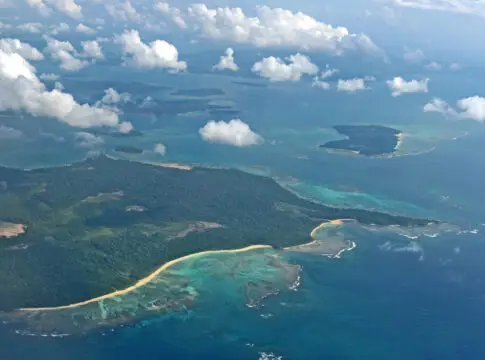
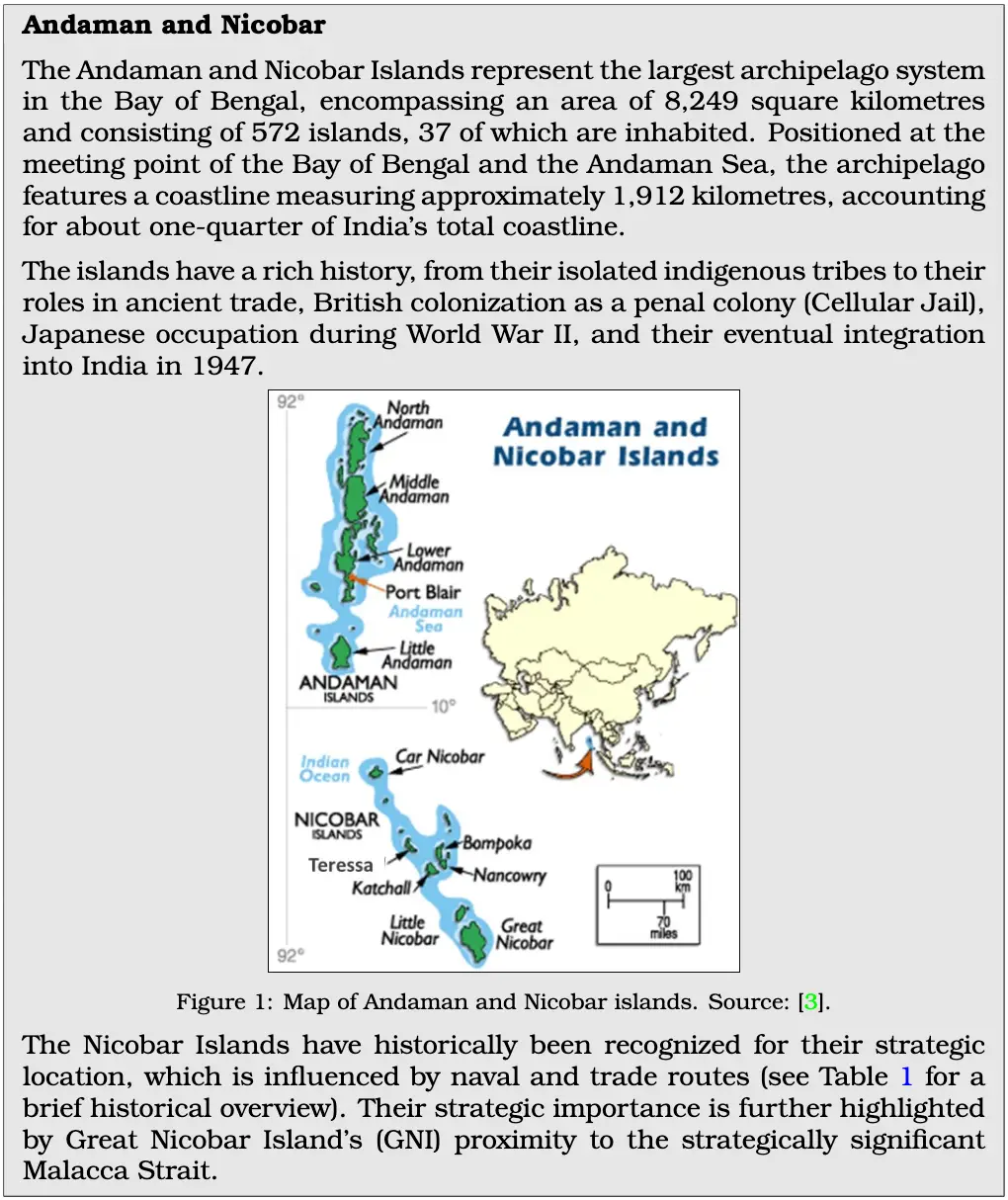
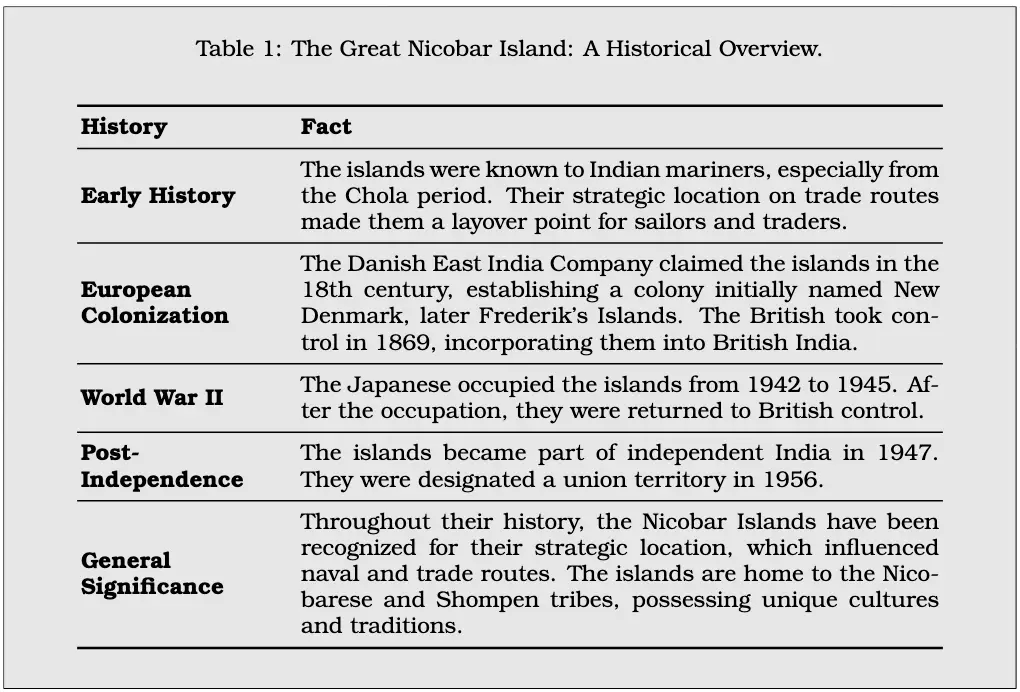
The GNI — see Figure 1 — has been selected as the primary port site for this project. The island is renowned for its unspoilt natural environment, featuring extensive forests, deep gorges, and pristine beaches that serve as nesting grounds for various species of sea turtles. Additionally, its proximity to the strategically significant Malacca Strait underscores its geopolitical importance. Within a short distance of its northern extremity lies India’s southernmost landmass, Galathea Bay. A substantial port city, encompassing 18% of the island’s land area, is envisioned for this project. The initial budget allocated is set at ₹ 72,000 crore, which has since been increased to ₹ 81,000 crore. The project’s objectives encompass the following key aspects:
- A transshipment hub.
- An international airport.
- A 450 MVA power plant.
- A city with a population of 350,000 (currently around 8,000).
The demand for drinking water alone is enormous.
Critics argue that the project is fundamentally flawed. Several unrealistic factors are at play, including significant geological risks, the potential loss of unique biodiversity, and the difficulties faced by the local communities, such as the Nicobarese and Shompen, who are classified as ‘particularly vulnerable tribal groups.’ Above all, many analysts are concerned that the project may not be economically sustainable.
Geological and Ecological Concerns
The chosen site is geologically unstable. The 2004 tsunami permanently changed the terrain of the Andaman-Nicobar Islands, sinking the southern tip of Great Nicobar by 15–16 feet. The entire landmass became lopsided, with the eastern part rising from its previous level and the western side sinking. The Indira Point lighthouse, once safely above the tides, is now partially submerged.
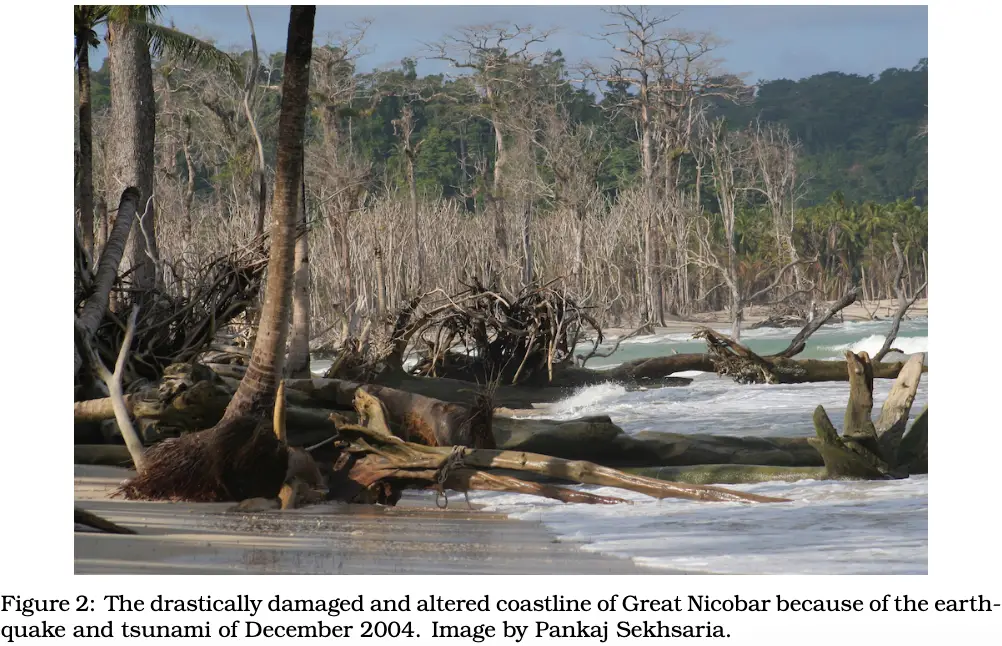
Since the region is located within the Himalayan collision zone, known as the area of highest seismic hazard (Category V), there is considerable concern that future earthquakes or tsunamis could cause catastrophic damage. This risk is emphasized by the fact that 442 earthquakes were recorded by the United States Geological Survey (USGS) in this area between 2010 and 2020, with magnitudes ranging from 4.0 to 6.6 on the Richter scale; notably, earthquakes above magnitude 5.0 are considered potentially destructive. Despite repeated warnings from experts, including Professor Janki Andharia, authorities have responded only with standard assurances about earthquake-resistant construction [4], rather than implementing comprehensive risk mitigation measures. Furthermore, the threat is heightened because over 80% of earthquakes in the region originate within 100 km of the eastern margin of Great Nicobar, putting local populations and infrastructure at serious risk.
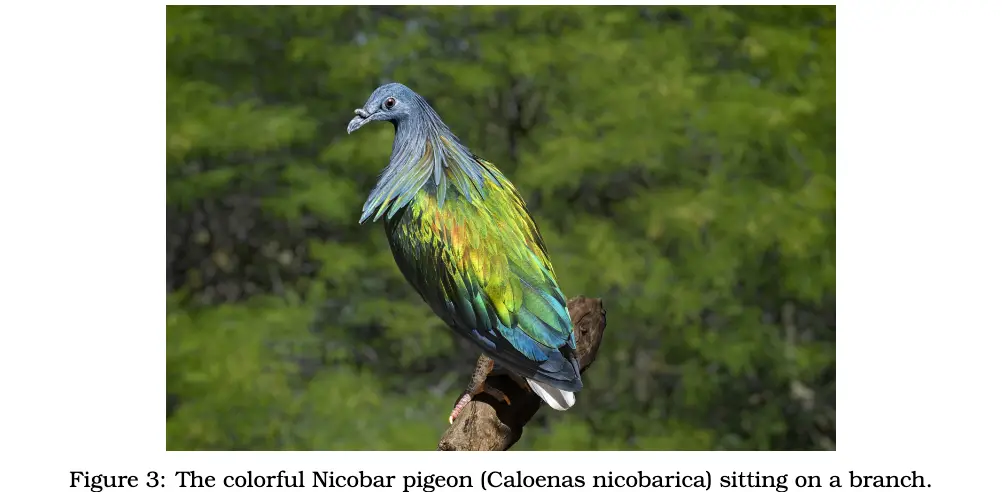
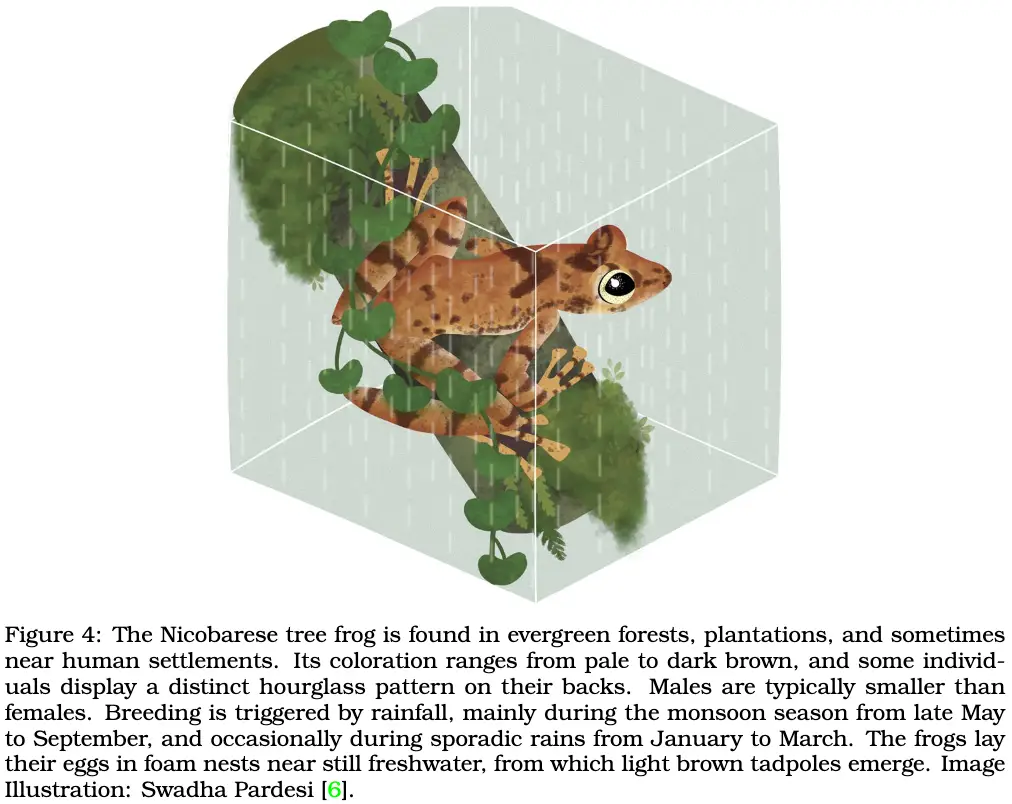
Great Nicobar’s lush tropical forests are recognized as a UNESCO biodiversity hotspot. These forests support an extraordinary variety of unique species, including 11 mammals, 32 birds, 7 reptiles, and 4 amphibians that are found nowhere else. In total, 71 bird species have been documented on Great Nicobar, with about 45% being endemic to the island. Endemism is even more pronounced among other animal groups, such as mammals, because they have a limited ability to disperse compared to birds and are less likely to reach distant areas. For example, 11 out of the 14 mammal species recorded on Great Nicobar are endemic.
Under Indian law, all major infrastructure projects are required to undergo an Environmental Impact Assessment (EIA) as mandated by the Environment (Protection) Act of 1986. Regrettably, two esteemed institutions — the Wildlife Institute of India and the Salim Ali Centre for Ornithology and Natural History — endorsed the EIA for this significant project, even though they acknowledged that the dense, impenetrable forests prevented them from conducting thorough surveys. 2
It is alarming that this rich habitat is now threatened with destruction. Despite its protected status, its conservation value is being overlooked. As reported by The Hindu, “even before the project’s Stage 2 forest clearance came in, the Andaman and Nicobar Islands Integrated Development Corporation Ltd (ANIIDCO) had invited expressions of interest for logging as early as September 2024” (The Hindu, 2024).
Pankaj Sekhsaria, a professor at IIT-Mumbai and an advocate for Andaman & Nicobar Affairs, shared an EIA consultant’s report in an article published in Sanctuary Asia in April 2023 (the report is also featured as the opening article in his book, titled `The Great Nicobar Betrayal: Pushing a Vulnerable Island Knowingly into Disaster,’~cite{Sekhsaria2024} which he curated and edited):
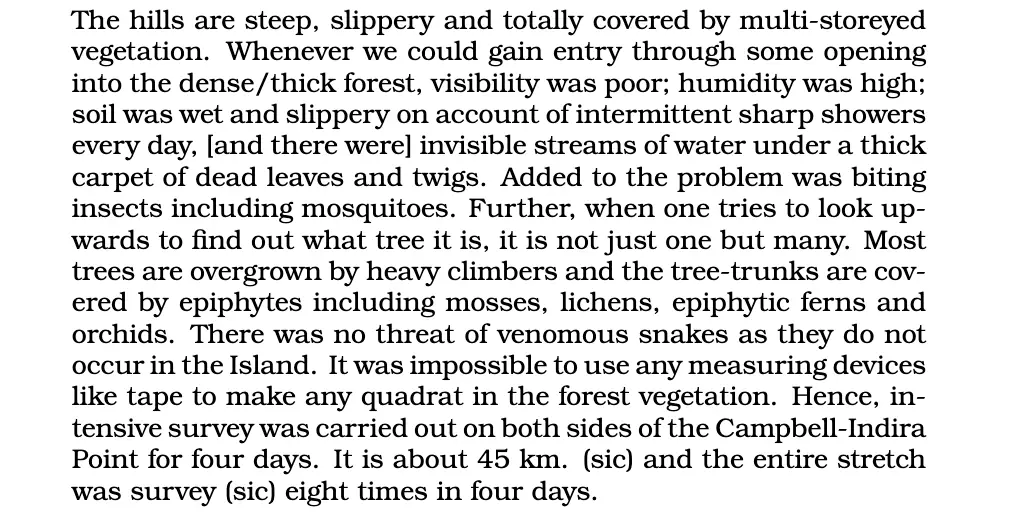
The report describes how lush the island is, but simultaneously supports its destruction. About 130 square kilometers of tropical forest will be felled, including many trees up to 45 meters tall. Official estimates indicate that one million old forest trees will be lost, while scientists believe the actual number is ten times higher. A forest is more than just trees; thousands or even millions of its inhabitants — including birds, reptiles, mammals, other animals, plants, and fungi — will perish as well. Ironically, the proposal mentions that an equivalent number of trees will be planted in Haryana, as if the unique flora, fauna, and delicate ecosystem of GNI can be restored or reproduced here.
The Great Nicobar Island is home to two national parks: Campbell Bay National Park and Galathea National Park. Both parks are recognized under the UNESCO Man and Biosphere Program. However, with the initiation of the trans-shipment port project, portions of the protected area have been de-notified to accommodate development.
This project threatens to destroy part of Galathea Bay, which is a critical nesting habitat for the endangered leatherback turtle (Figure 4). Authorities assert that turtles will adapt by using a narrow “designated corridor” set aside within the port zone. This callous assertion expects the turtles to disregard the presence of ships, potential oil spills, and the constant noise from human activity. When questioned about their expertise with Giant Leatherback Turtles, representatives from the Wildlife Institute of India acknowledged that they did not have any prior experience in working with this species.
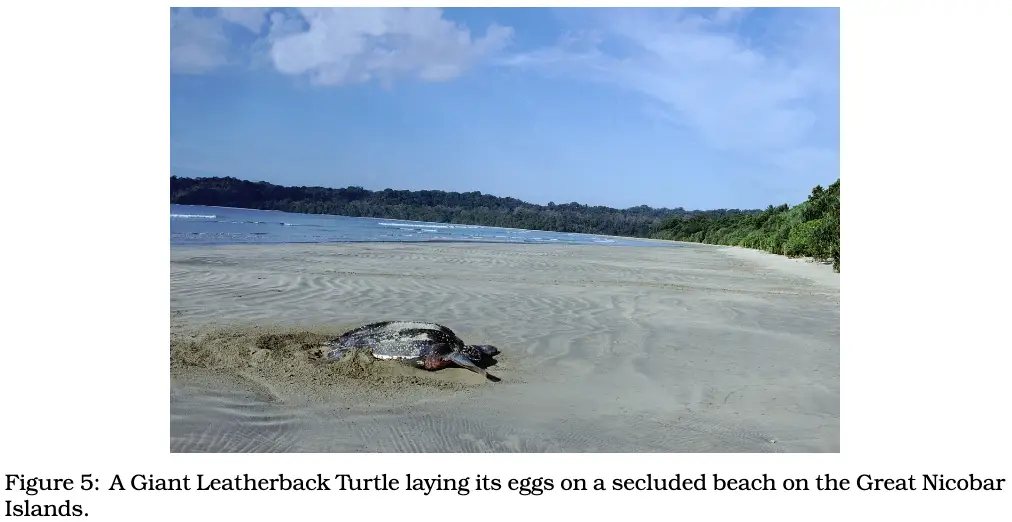
In 1997, 11.44 square kilometers of this area were designated as the Galathea Bay Wildlife Sanctuary to safeguard these turtles. Ironically, in February 2021, the Environment, Forest, and Climate Change Ministry’s National Marine Turtle Action Plan recognized Galathea Bay as the most Important Marine Turtle habitat in India. However, it is noteworthy that this sanctuary had been quietly de-notified before that announcement to facilitate the construction of a port.
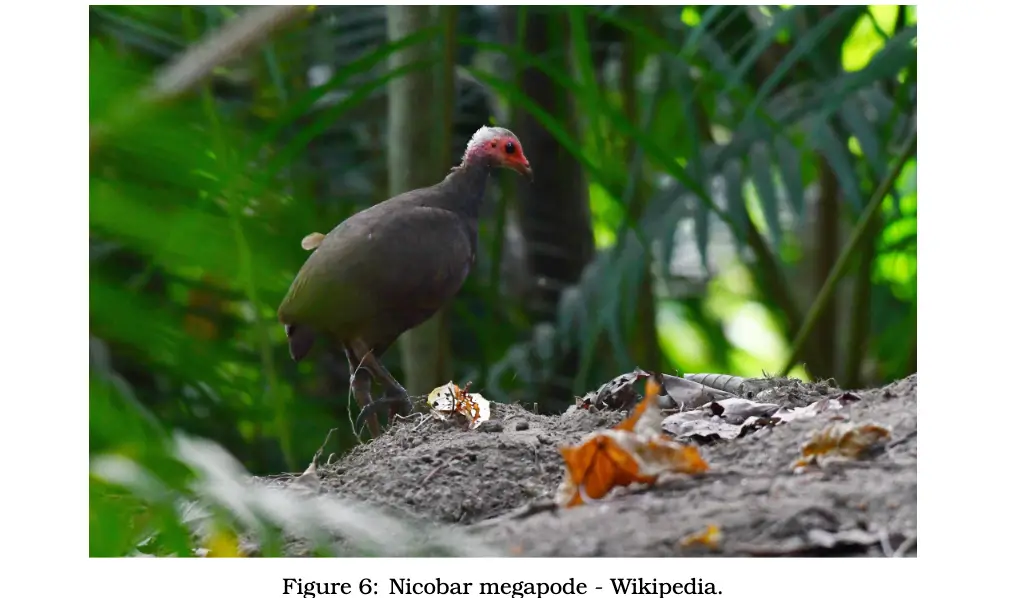
Great Nicobar is renowned for its extraordinary avian species, the Nicobar Megapode (Figure 6). This unique bird exhibits a remarkable reproductive strategy, incubating its eggs within decomposing leaf mounds. Unfortunately, the Nicobar Megapode is classified as “vulnerable to extinction” under the International Union for Conservation of Nature (IUCN) Red List.
Most megapode species are found east of the Wallace line — a crucial zoogeographical demarcation established by Alfred Russel Wallace that separates the distinct animal species of Asia from those of Australasia — in places like New Guinea and Australia. The Nicobar Megapode is unique because it is the only megapode species found west of the Wallace Line, specifically on the Nicobar Islands. This geographic isolation results in limited genetic diversity and a reduced number of nearby relatives, making the species particularly vulnerable to extinction due to habitat loss and other environmental pressures.
The Indian government’s plan to develop Great Nicobar Island into a strategic hub will dramatically increase human activity and deforestation, thereby threatening the megapode’s existence by destroying its coastal nesting habitats. These changes could push the already vulnerable Nicobar Megapode closer to extinction, resulting in the loss of a species found nowhere else in the world, thereby diminishing global biodiversity.
Plight of the Indigenous Tribes
Two Indigenous tribes reside in GNI, the Shompen and the Nicobarese. Both are officially declared as Particularly Vulnerable Tribal Groups. The tsunami of 2004 killed many of them and devastated the lives of the survivors. Many were taken to the Campbell Bay region and were accommodated in slums. But since that time, they have become refugees on their island. Despite their pleas, they were not allowed to return to their villages, and they are now living a life they could never have imagined. In a town foreign to them, they now earn their livelihood as coolies or laborers. And now, their ancestral land will be seized for the project. Amitav Ghosh refers to this as disaster capitalism — profiting from others’ ruin. The government, however, euphemistically brands it as Holistic Development of Great Nicobar Island.
Questions About Viability
Despite the widespread devastation, a critical question lingers: Is the Great Nicobar project financially viable?
In his Frontline article of Feb 12, 2025 [6], independent journalist M. Rajshekhar examines this issue, consulting multiple sources before concluding that the project suffers from a severe cost-revenue imbalance. His analysis reveals three key challenges:
Exorbitant Construction Costs
Building in Great Nicobar is 2.5 to 3 times more expensive than on the mainland, drastically inflating the project’s budget.
Limited Revenue Potential
- The port cannot charge higher cargo fees than competitors like Colombo, meaning income from container handling will barely cover loan interest.
- The adjacent urban development, unlike mainland cities, lacks alternative revenue streams. Tourism and related activities are the only options—far too weak to balance the books.
Given these constraints, Rajshekhar suggests the project faces three possible outcomes:
- Private development with viability gap funding from the government.
- Full government-led development.
- The government constructs basic infrastructure, while a concessionaire manages the port, providing the state with a 53% revenue share.
A closer examination suggests that none of the proposed business models guarantees the port’s profitability. Given funding limitations, development is expected to progress slowly. Yet shipping companies are unlikely to relocate operations unless all critical infrastructure — including the port, housing, banking, healthcare, and other amenities — is fully functional. This creates a chicken-and-egg dilemma: the port cannot generate revenue without tenants, but without revenue, completing development becomes exceedingly difficult.
Some speculate that the government’s true motive may be strategic — to establish a military or naval outpost rather than a purely commercial port. However, this theory remains unproven, and even if valid, it raises further questions. Military infrastructure projects elsewhere in India have faced chronic funding shortages, leaving many half-built. Without a clear justification, diverting resources to this project while neglecting others seems economically irrational. This mismatch may explain why, despite interest in construction contracts, few operators might commit to running the port long-term.
If the aforementioned financial and logistical challenges persist, the project risks becoming a fiscal burden, sinking public funds into an unviable venture while irreversibly damaging Great Nicobar’s fragile ecosystem. Yet preliminary construction has begun at Campbell Bay to support workforce logistics despite legal challenges — including a dismissed National Green Tribunal case (May 2023) and pending Calcutta High Court hearings.
Lacking a strong financial or strategic footing, the project risks undermining economic and environmental stability.
- Under the guise of holistic development (hereafter called the project), the Indian government is aggressively pursuing a flawed plan to transform Great Nicobar Island into a center for trade, tourism, and strategic interests [2] ↩︎
- This is concerning because such endorsements lend scientific credibility to the EIA, even when the assessment may be incomplete or unreliable. Without comprehensive surveys, the EIA might fail to identify important ecological risks, potentially leading to decisions that could harm the region’s biodiversity and undermine conservation efforts. ↩︎
References
[1] A. Ghosh, The Nutmeg’s Curse: Parables for a Planet in Crisis, en. London, England: John Murray, Oct. 2022.
[2] V. Roy, Editor’s note, en, https://frontline.thehindu.com / environment / nicobar – nightmare – editors – note – vaishna – roy / article66349851.ece, Accessed: 2025-7-12, Jan. 2023.
[3] Raj, Andaman & nicobar tourist map – andaman & nicobar travel google map, en, https://www.traveldealsfinder.com/ andaman-and-nicobar-maps.html, Accessed: 2025-7-11, Sep. 2010.
[4] J. Andharia, V. Ramesh, and R. Dhiman, Great Nicobar development projects disregard risk in earthquake-prone area, en, https://frontline.thehindu.com/environment/great-nicobar-development-projects-disregard-risk-in-earthquake-prone-area/article66349616.ece?utm_source=more_stories_this_issue&utm_medium=article, Accessed: 2025-7-11, Jan. 2023.
[5] P. Sekhsaria, The great Nicobar betrayal: Pushing a vulnerable island knowingly into disaster. 2024.
[6] Shatakshi Gawade and Swadha Pardesi, The sanctuary papers – April 2023, en, https://www.sanctuarynaturefoundation.org/public/article/the-sanctuary-papers—april-2023, Accessed: 2025-7-11, Apr. 2023.
[7] M. Rajshekhar, The Great Nicobar Project: A costly miscalculation? en, https://frontline.thehindu.com/environment/great-nicobar-project-campbell-bay-transshipment-terminal-galathea-bay-infrastructure-project/article69159231.ece. Accessed: 2025-7-11, Feb. 2025.